We have this guy, Brendan, who flies up every now and then from the University of Southern California (USC) in Los Angeles to compete in hackathons with us. This clown flew up last weekend to join our team at Cal Hacks 13.
I am still in shock (it’s been two days) at how much we won—six prizes, including recognition from Anthropic and Microsoft, and an overall Cal Hacks award! This makes us the most awarded team in 13 years of Cal Hacks history.1
At Cal Hacks 13 we won:
- Cal Hacks’ overall award Best People-First Social Impact Hack
- Microsoft’s Customer Impact Award
- Moss’s Best Use Award (1st Place)
- Apify’s Best Use Award (1st Place)
- Anthropic’s Claude for Public Good Award (2nd Place)
- Convex’s Best Use Award (2nd Place)
After our name showed up on the screen twice, my team started getting quite confused.2 Saying “I am still in shock” does not quite do the feeling justice.
How We Did It
We arrived at the Palace of Fine Arts at ~7 p.m. on Friday, having missed the opening ceremony and a few hours of hacking because I (sorry, team) had to attend an Ethics, Engineering, and Society lecture.
I ate three and a half burritos, we got some snacks, and we couldn’t come up with an idea. At around 9:30 p.m. we finally decided we would make something that would save people’s lives. Brendan remembered reading about Anthony Mitchell in 2025, and we started thinking about what systems failed, what we could’ve done to help him, and eventually came up with our unnamed idea. Imagine if we could call everyone in an area, find out what help they need, and show that to emergency services?
At this point I left to co-host a builder’s meetup with Cory Levy, founder of Z Fellows:
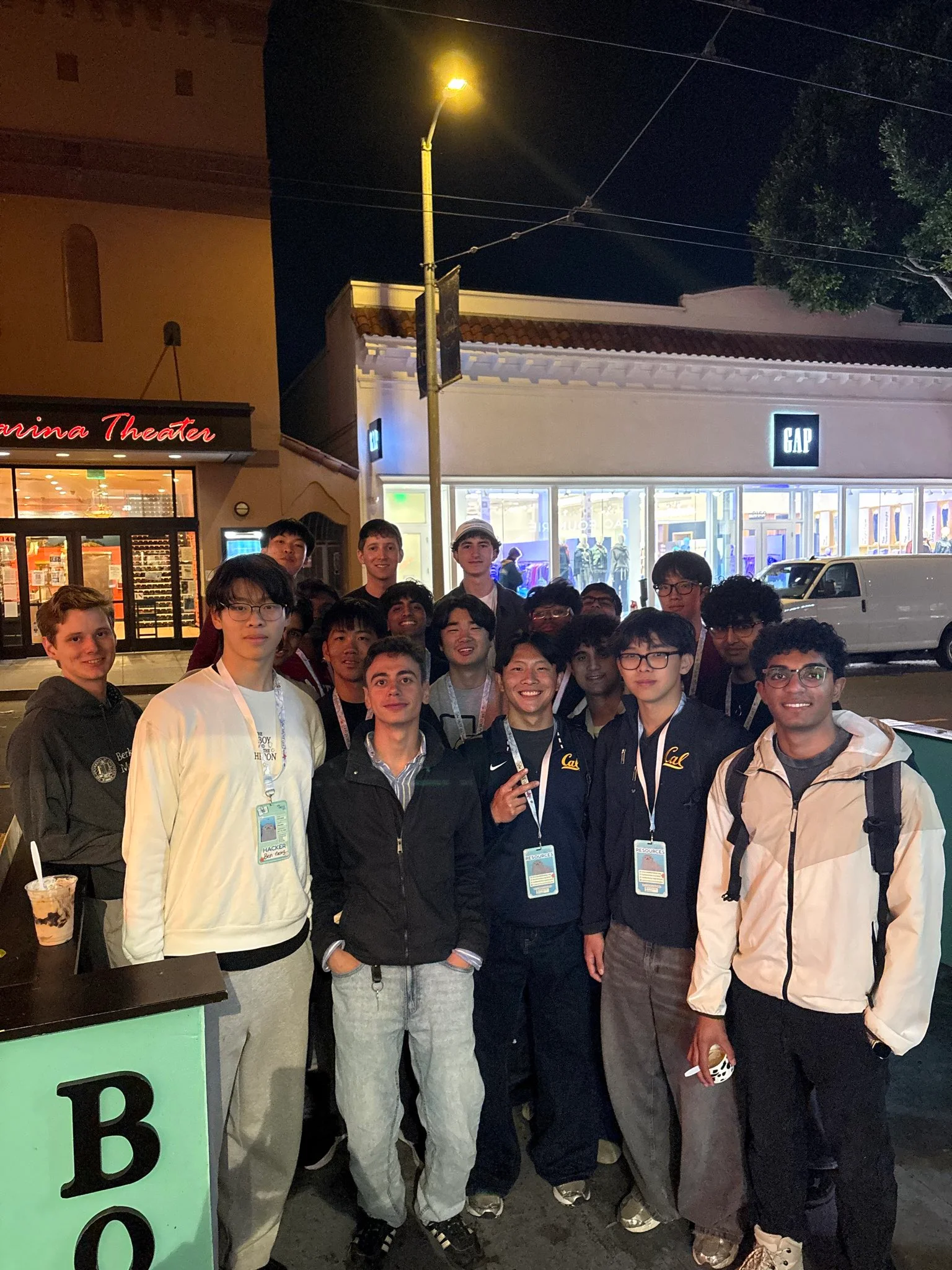
Then we went back to Jerry’s house in Palo Alto (which has an abundance of couches) and started building.3
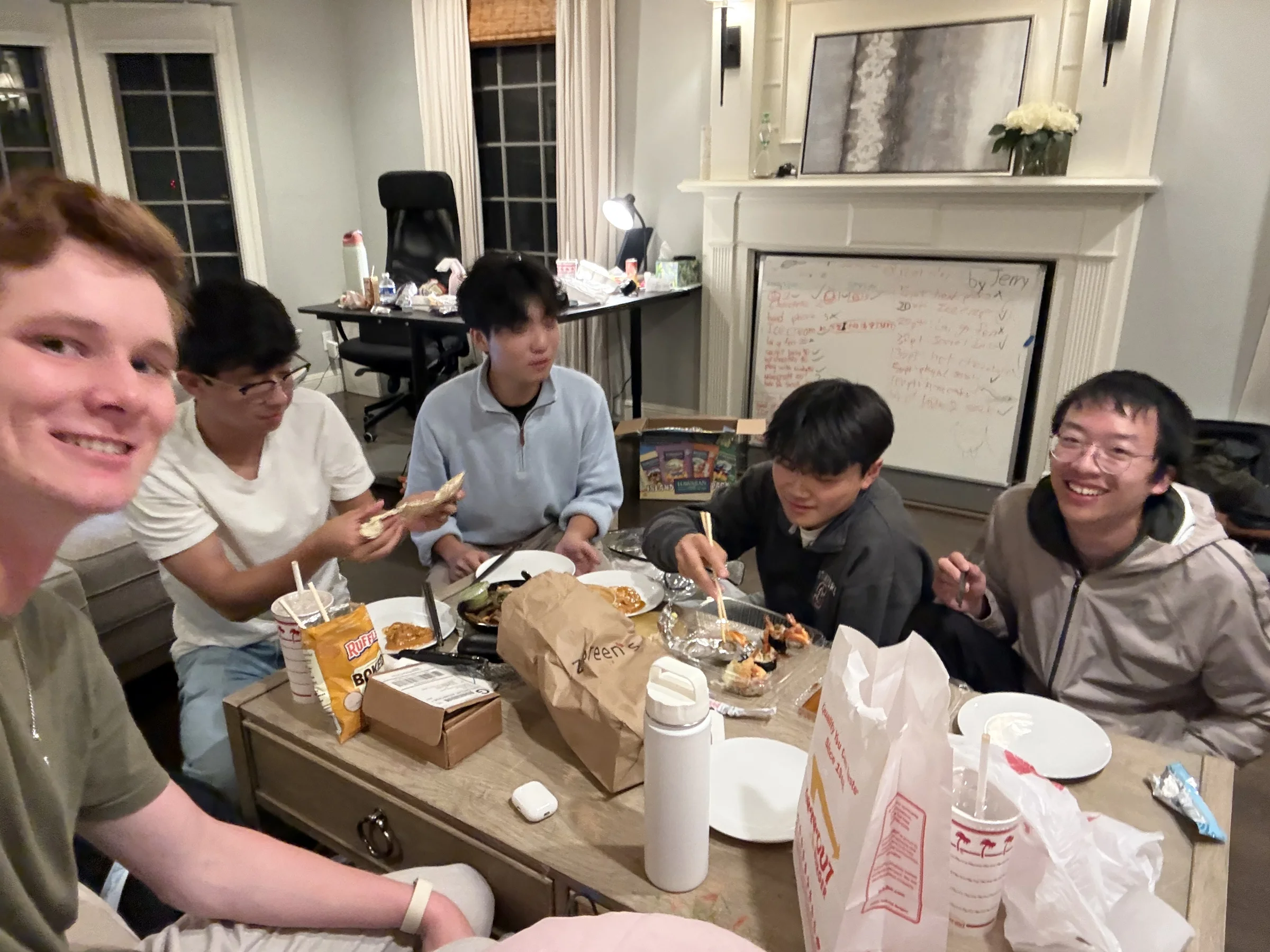
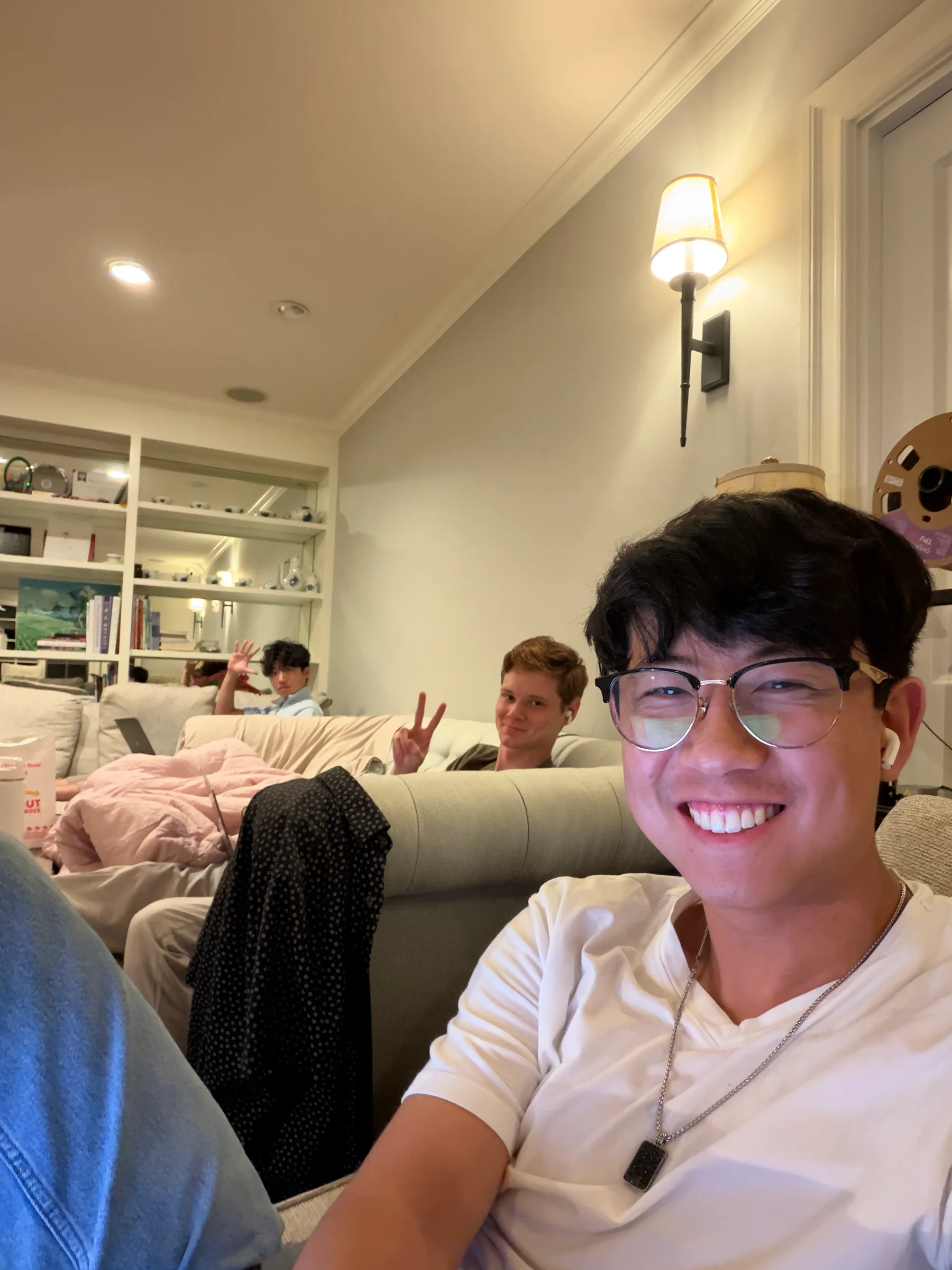
Having started Cal Hacks late, we got only 4 hours of sleep, and at around 9:30 a.m. on Saturday we had the basic structure of our app somewhat implemented:
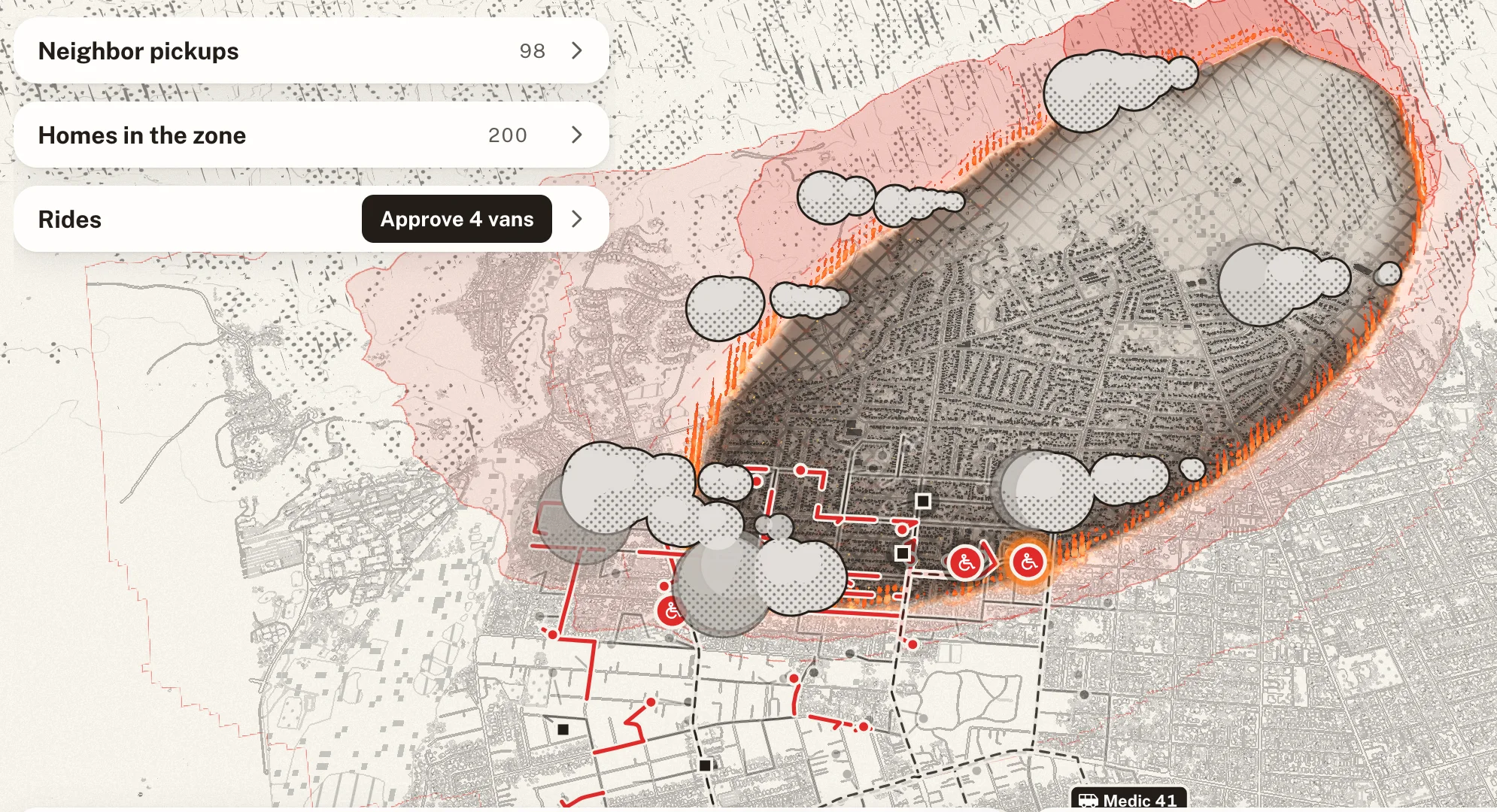
The core of our idea was having neighbors who are evacuating help their neighbors evacuate to reduce the stress on 911 dispatchers and emergency services in the case of an emergency. We call everyone in an area with voice agents, ask about their evacuation status (already left, leaving, or needing help), then run an optimization algorithm called ALNS (adaptive large neighborhood search) to find the shortest evacuation paths for every person while maximizing the number of people evacuated.
At 10 a.m. on Saturday, Brendan and I had a meeting with Chase Bank (which went well), but after the meeting, as we got in the car, we had a great idea that went something like this:
Brendan: “What if we… And hear me out. Yo, stop texting your girlfriend and lock in. What if we drove down to the fire station and asked them what they think of this idea? Would that be crazy?”
Me: “Yeah.”
Brendan: “We shouldn’t do it?”
Me: “Huh? Can you repeat what you said? Sorry, I was texting my girlfriend.”
So, yeah. We drove to two stations in Palo Alto and Stanford on Saturday and talked to a dozen firefighters, who were a) AWESOME PEOPLE and b) REALLY FUN TO TALK TO and c) really interested in our idea; they gave us a ton of advice that we were actually able to integrate into our project.
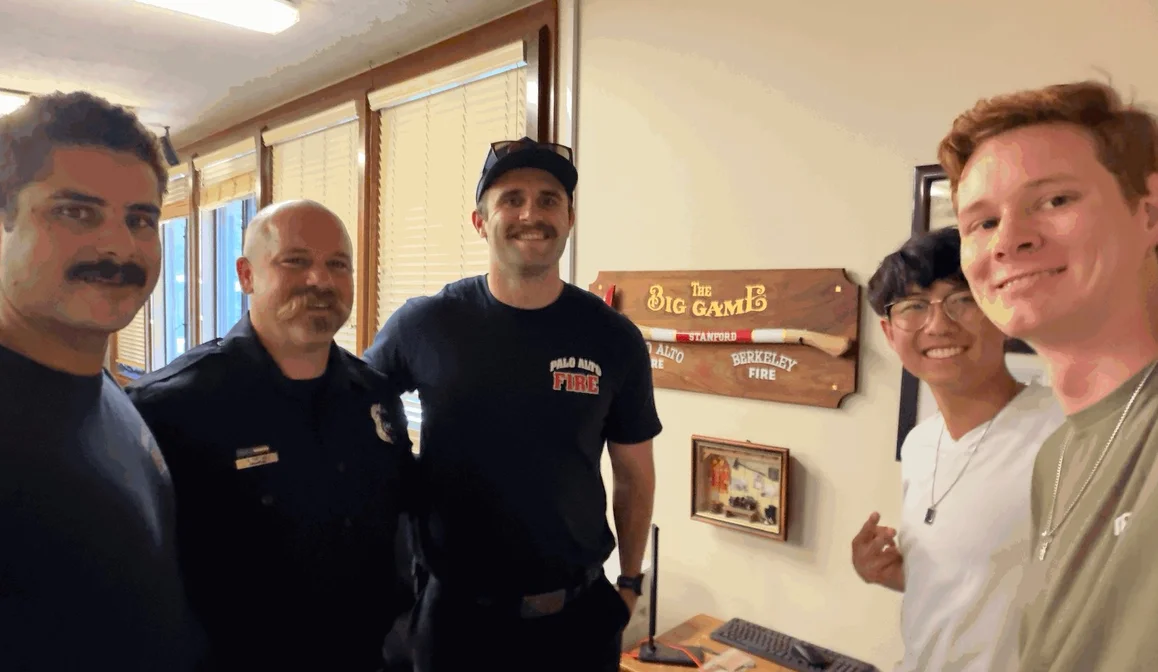
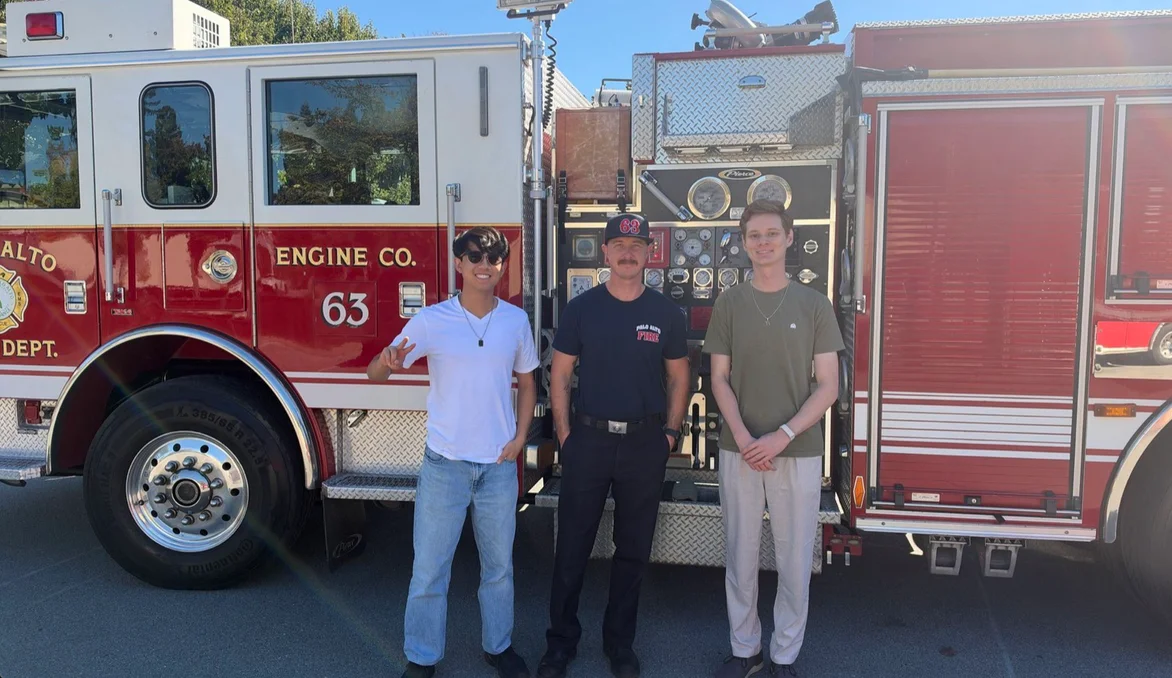
We spent the rest of the day hacking & trying to make everything work (including the presentation and script), until at 3:30 a.m. on Sunday we decided it was time to start on the submission video.
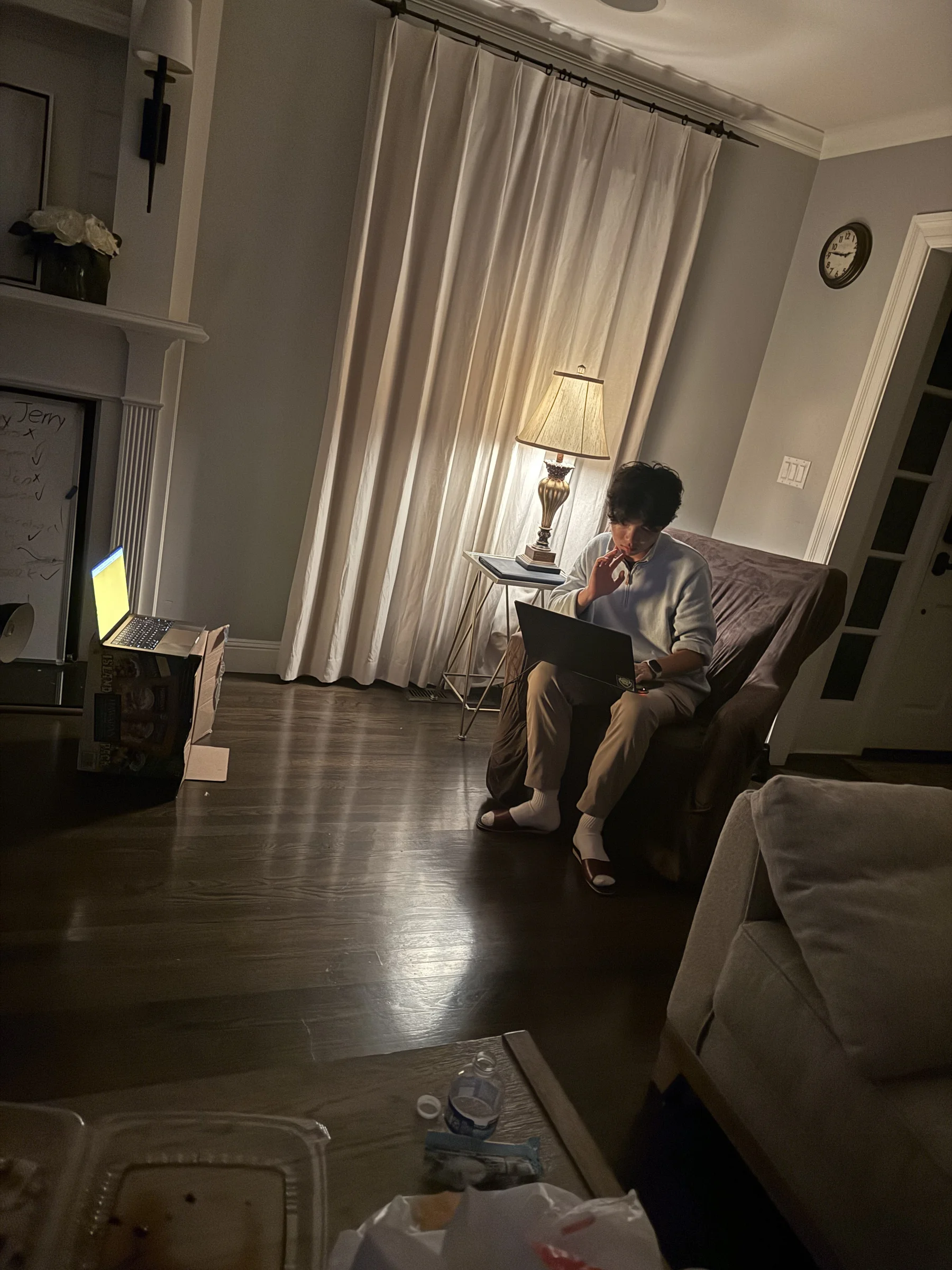
We filmed a couple of shots (using laptops as key lights and draping my spare shirt over lamps as diffuse lighting), and started editing. It was at this point we realized our voice agent (the most important part of our project) was really quite bad… This is all to say we went to sleep at 6 a.m. and woke up at 7:30 a.m.4
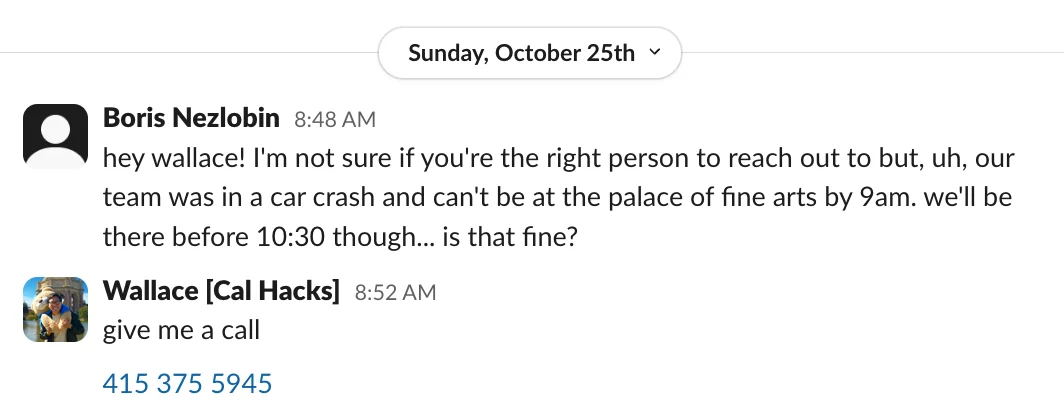
After submitting, we were quite elated and set out to the Palace of Fine Arts. The following screenshot is provided without comment:
We did judging, ate lunch, scrolled some Twitter (that was mostly me), and waited.
Finally the awards ceremony started, and the Claude for Public Good award was announced first. We hadn’t talked to Anthropic’s judges during judging, but they had stopped by informally during lunch. We weren’t too hopeful. Well, imagine our surprise when our name was announced!
Then came Microsoft, which had over four hundred submissions. We weren’t hopeful at all for this one, and I was on Twitter. Then they also said our name. At this point a vague sense of disbelief was beginning to settle upon us, because, like—really? We’re the best? I remember ticking “We’d like to submit for Microsoft Customer Impact Award” while thinking “like yeah I guess we impact customers lol” after 1.5 hours of sleep.
Our name came up four more times, including in a Cal Hacks grand prize (People-First Social Impact), and people kept coming up to us to connect or get our emails, and I remember thinking… nah. I wasn’t thinking. I was more than half-asleep, I have no idea what I said or who I talked to. But I do remember being deeply in shock, not on Twitter, and seeing “Standard Response” on the screen six times.
Holy shit, dude. Six prizes at the largest collegiate hackathon ever organized.
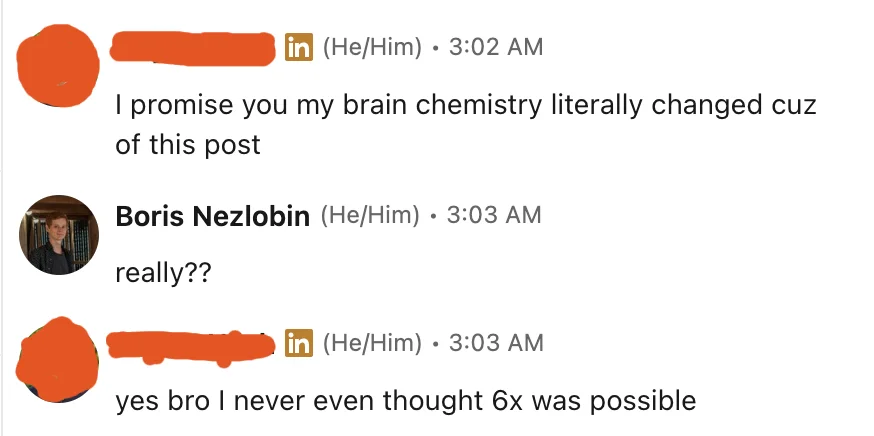
I didn’t think even one was possible…
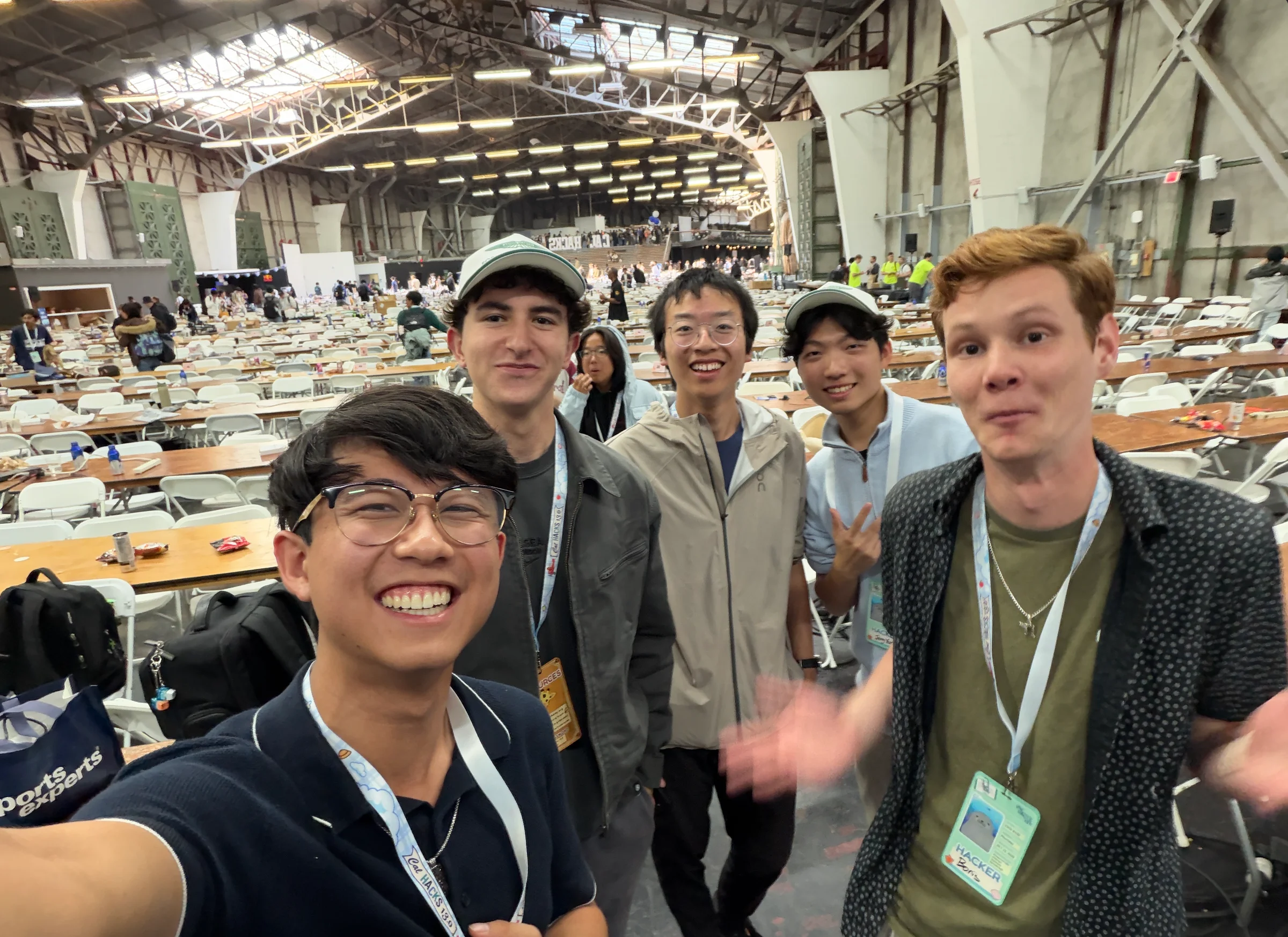
And not 30 minutes after winning a record-breaking number of prizes at Cal Hacks 13, notifying our parents (who were mildly impressed, but asked about my grades in college before saying congratulations), and getting the pictures with the Cal Hacks bear… my team was already looking for food.
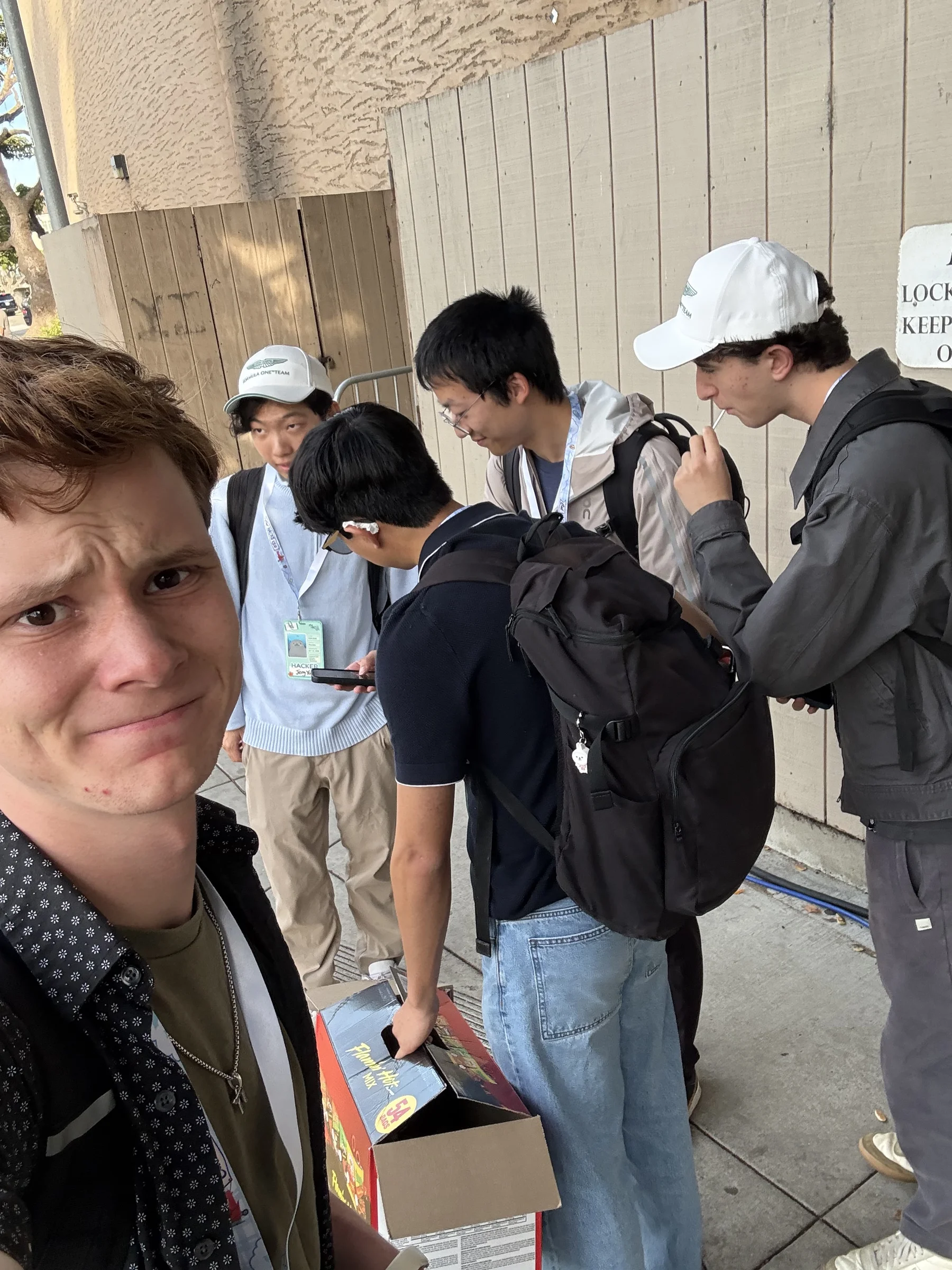
“Instinct, find me a place with Asian food that isn’t too expensive but is still a little expensive in SF near the Palace of Fine Arts.”
And then I went home and went to sleep.
How Do We Keep Doing It?
A surprising number of people have reached out to me asking how we do some of our truly incredible presentations (check out the YouTube demo video or our Standard Physics presentation), and how we keep winning hackathons:

And honestly my answer to this is often quite disappointing:
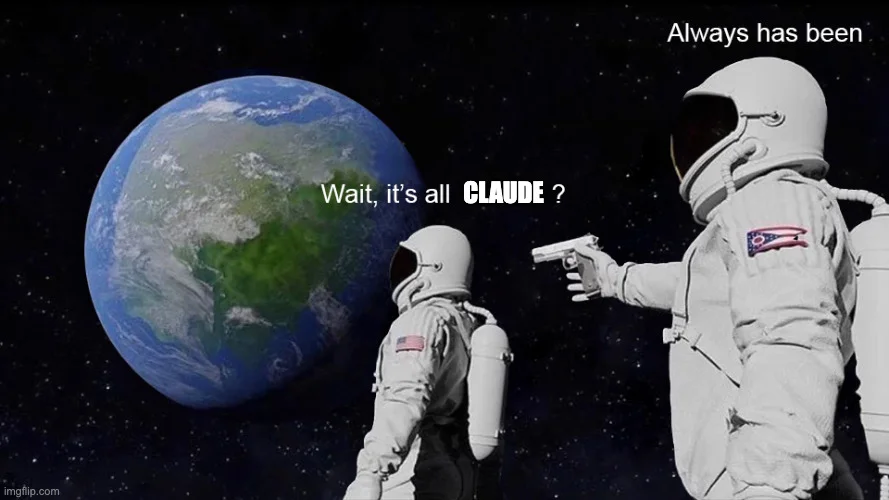
Claude (or Codex) can make exceptional presentations—I haven’t opened Google Slides in six months now—but a large number of our wins (all of them, in fact) come from two fundamentally human elements:
- A unique idea, and
- The ability to make an audience feel something.
I won’t go too deep into this. Sequoia, a16z, YC, Paul Graham, and Steve Jobs have all written and spoken at length about ideas. Make something people want: make a good idea, present it well, make people feel. You will do very well (and not just in hackathons) with this skill!
In hackathons in particular, I’ve noticed that many ideas are just… same old, same old. They don’t solve a problem, they aren’t very technical, or they’ve been done a hundred times before. Avoid ideas like that. A great place to start is by coming up with your own ideas—the ideas that Claude and Codex have given us for hackathons have, almost always, been abysmal.
Build something cool. Have fun doing it. Solve problems. Enthusiasm is contagious: if you love your idea, everyone else will too. Work on something you are actually excited about!!
But enough of that. As I tell people, these things are very learnable, or something you can fake with practice. Something you can’t “learn” is the team, but it’s obviously quite important. My four-person gang—myself, Brendan Giang, Jerry Yan, and David Wu—met in high school and has since had a decently successful history. We’ve won a lot and even been written about by companies and journalists who have dubbed us the “Standard Mafia.” The reason for this is quite simple: Brendan spends money on flights, then is motivated to make enough money to cover those flights, works hard, wins, and then we split the prize money four ways. That’s a joke, obviously. My thoughts here are simple: you will find the greatest amount of success by loving to spending time among people who are even more successful than you.
Last thing. If you take any of my advice, I hope it’s this: take more pictures.
Everyone’s success will look different; you may win hackathons solo, with people you just met, or with a team that flies out for you. You may win by building hardware or software. You might win with a practical idea or a technically impressive silly project. (This paragraph is not about hackathons.)
There is no one path to success, ever—the only advice that will apply to everyone is to take more pictures. Thirty years from now when the money, accolades, and accomplishments matter a lot less, you’ll regret that you didn’t take enough pictures.
Will We Keep Doing It?
In gambling they say if you’re winning you have to ride the high, right? And if we lose the next one, well, we can’t end on a loss.
Can’t wait to do even more.
Airing of Grievances
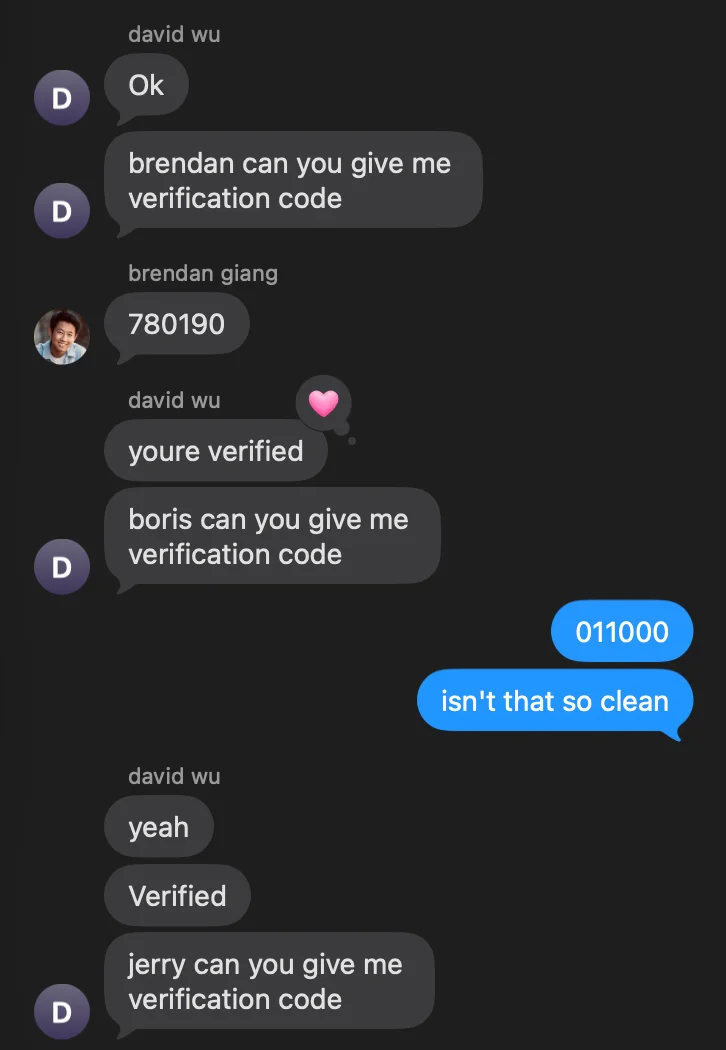
At 2:21 a.m. I feel like my team didn’t quite display the proper amount of enthusiasm here:
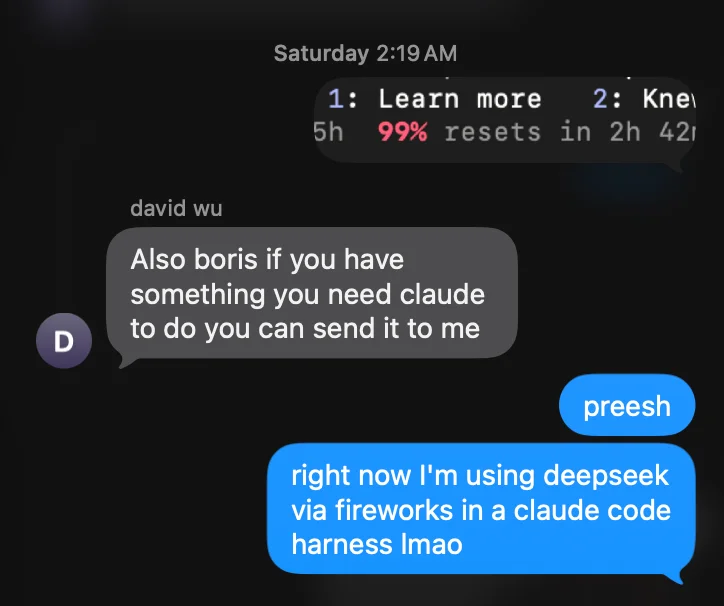
Or here, where I got entirely ghosted:
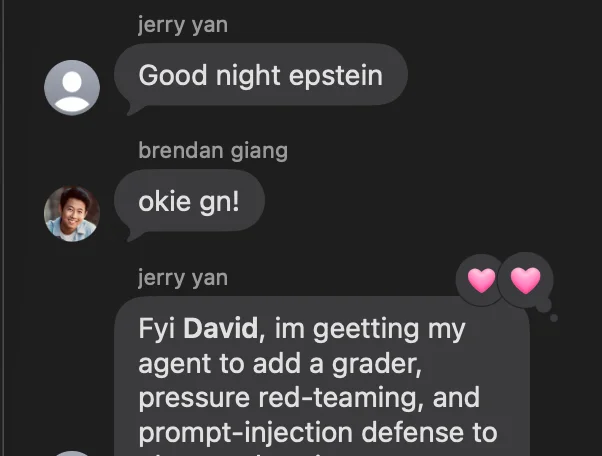
At 4 a.m. we started just saying random words in the group chat:
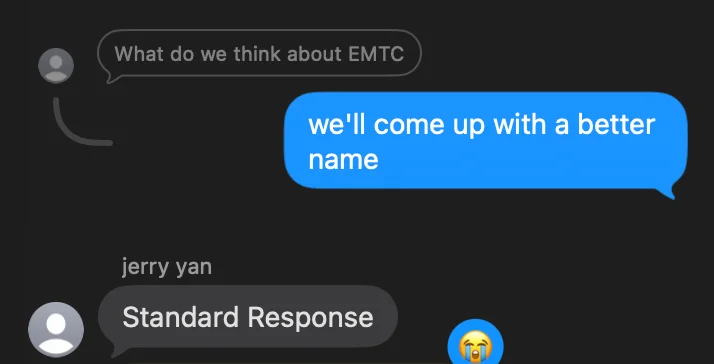
Stern parenting is how I get my subagents (teammates) to give good ideas (no joke, this is how we came up with the name Standard Response):
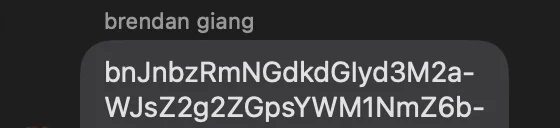
My teammates just sent all of our API keys over Messages repeatedly:
Jerry’s Claude added a button called “Start a fire” in our app for… evacuating people away from fires? Can’t even make this up:
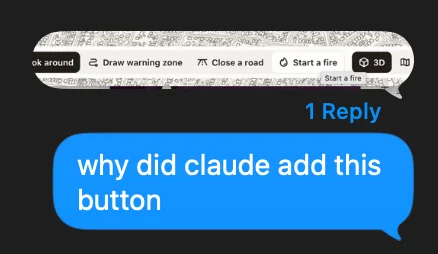
In all seriousness, moments like this are why I love hackathons with this team; these guys are awesome & I had nowhere else to post these screenshots :)
Links:
- The YouTube videeyo
- The LinkedIn poast
- The GitHub repositree
-
Needless to say, we paid off Brendan’s flight ticket back to LA. ↩︎
-
So did the announcers—I think by the time Convex announced, we had won three awards already. The announcer said we were really “cleaning house.” Brendan has been using this clip in our group chat at every occasion lol. ↩︎
-
Prompting Claude. That’s what building is nowadays! ↩︎
-
My Google Health app was not at all happy about this. ↩︎